Hinge Hangovers: Is Modern Dating Making You Tired, Anxious, and Distracted?
From PTO to anxiety, new data reveals the hidden toll of dating apps and casual encounters.
Dating today doesn’t just stay in your personal life. It follows you into your inbox, your sleep schedule, and even your workday. To better understand how modern dating habits impact health, productivity, and emotional well-being, ZipHealth surveyed 1,002 US adults who were single, casually dating, or in non-exclusive relationships and had been on at least one recent date or encounter.
The results reveal how late nights, emotional investment, and post-hookup uncertainty are shaping more than just relationships. They are influencing how people feel, function, and care for their health in everyday life.
Key Takeaways
- Over half of singles (55%) say their dating life has negatively impacted their job performance, from burned PTO to missing a meeting.
- Dating app users are 50% more likely than non-app daters to experience sexual health anxiety after a casual encounter (31% vs. 21%).
- 1 in 5 singles (21%) has avoided STI testing despite feeling anxious. Embarrassment is the No. 1 barrier, cited by 44% of those who delayed.
- Nearly 3 in 4 singles (74%) have taken a deliberate break from dating or deleted their dating apps due to burnout, and 61% have done it more than once.
- Dating has directly disrupted the mental health of 54% of singles, and 40% say it has disrupted their sleep.
- The biggest drain of modern dating isn't ghosting or late nights. 44% of singles say it's the emotional investment in people who don't reciprocate.
When dating follows you to work
Balancing dating and daily responsibilities can be harder than it seems. For many singles, the effects of a night out or a late conversation carry into the next workday.
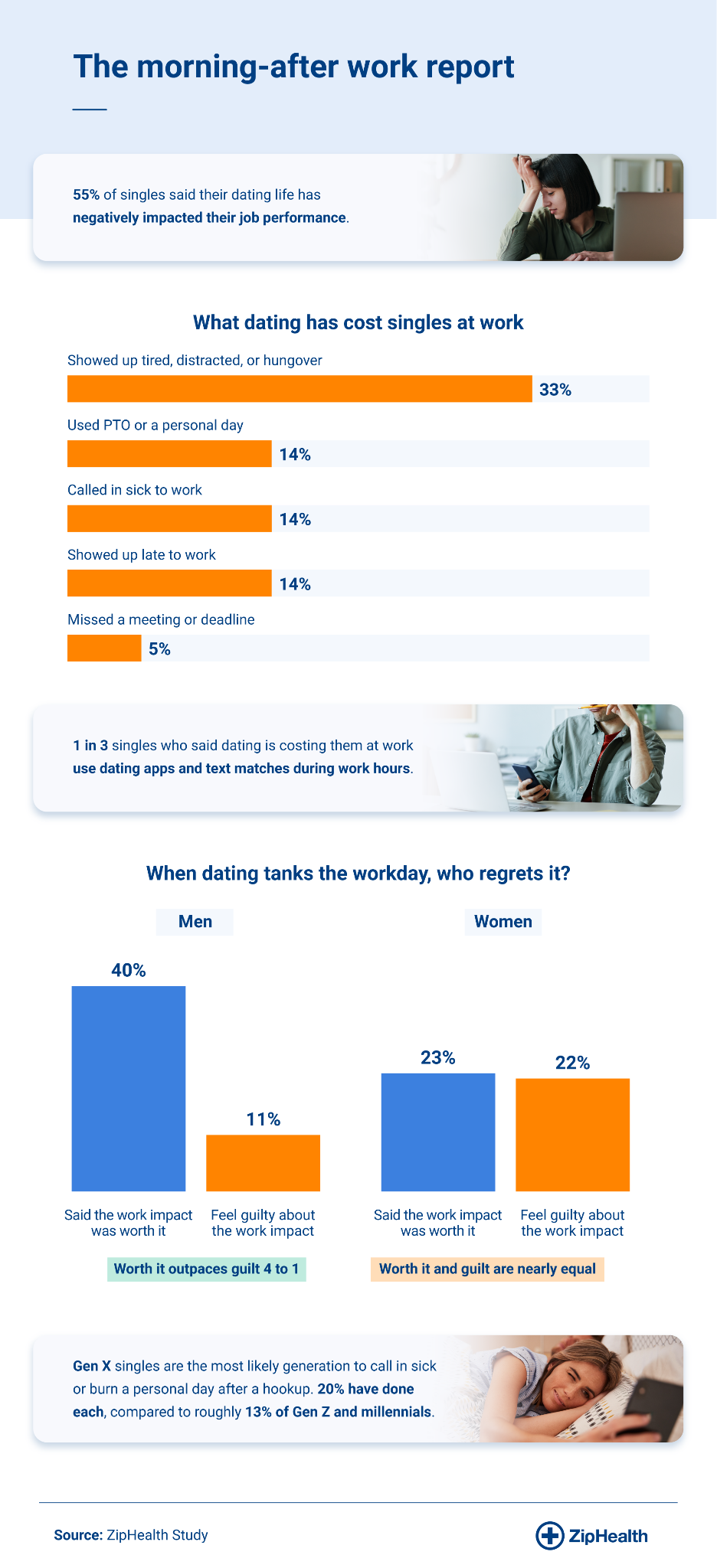
More than half of singles (55%) said their dating life affected their work in some way. This ranged from feeling tired or distracted (33%) to using paid time off after a date or hookup (14%). The overlap between personal life and professional performance was more common than many might expect.
About one-third of singles (33%) reported showing up to work tired, distracted, or hungover after a date or encounter. Another one-third (33%) admitted to using dating apps or texting matches while on the clock, showing how hard it can be to disconnect during the workday.
Time off was also part of the picture. 14% called in sick, and another 14% used a personal day specifically due to a date or hookup. Gen X singles were the most likely to take time off, with 20% reporting calling in sick or using PTO, compared to about 13% of Gen Z and millennials.
Reactions to these trade-offs varied. Among those whose work was affected, men were nearly twice as likely as women to say it was worth it (49% vs. 23%). Women, on the other hand, were twice as likely to feel guilty about the impact on their job (22% vs. 11%).
The morning-after health check
The hours after a casual encounter often come with more than just fatigue. Many singles reported navigating a mix of physical recovery and health-related uncertainty.
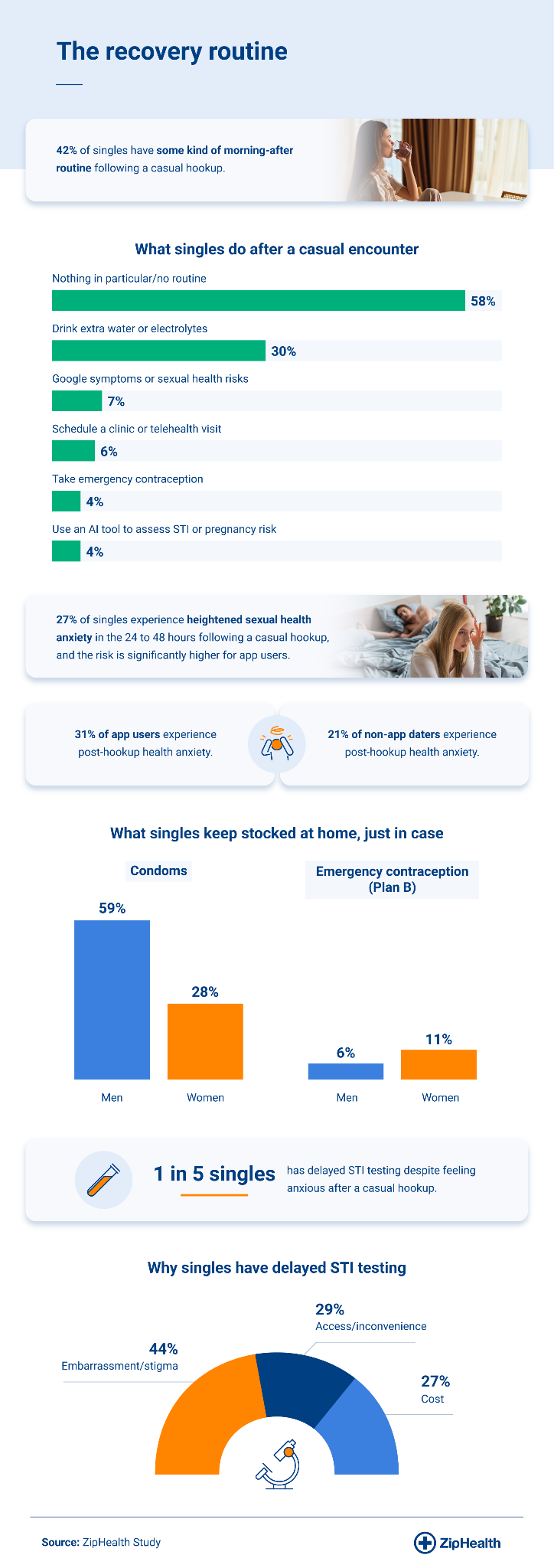
A significant share of singles (42%) said they had a go-to routine after a night out. Hydration was the most common step (30%), followed by searching symptoms online (7%) and, for some, scheduling a clinic or telehealth visit (6%). These habits suggest people are actively trying to manage both physical and mental after-effects.
Sexual health anxiety was also common. More than 1 in 4 singles (27%) experienced heightened anxiety in the 24 to 48 hours after a casual encounter. Women reported this more often than men (32% vs. 22%), and app users were significantly more likely to feel this type of stress than those who met partners offline (31% vs. 21%).
Despite that anxiety, many delayed taking action. 1 in 5 singles (21%) avoided STI testing even when they felt concerned. Embarrassment was the leading reason (44%), followed by access (29%) and cost (27%), highlighting emotional and practical barriers to care.
A lack of awareness also played a role. 16% of singles did not know that at-home testing, telehealth services, and emergency contraception are widely available. This gap can make anxiety linger longer than necessary.
Some turned to alternative solutions. Men were more than twice as likely as women to use AI tools like ChatGPT to assess STI or pregnancy risk instead of seeing a doctor (6% vs. 3%). Preventive habits also differed, with men more likely to keep condoms (59% vs. 28%) and at-home STI tests (5% vs. 2%), while women were more likely to keep emergency contraception (11% vs. 6%) and pregnancy tests (8% vs 2%) on hand.
Why modern dating feels so exhausting
Emotional energy is one of the biggest costs of dating today. Many singles described a cycle of effort, uncertainty, and burnout that goes far beyond a bad date.
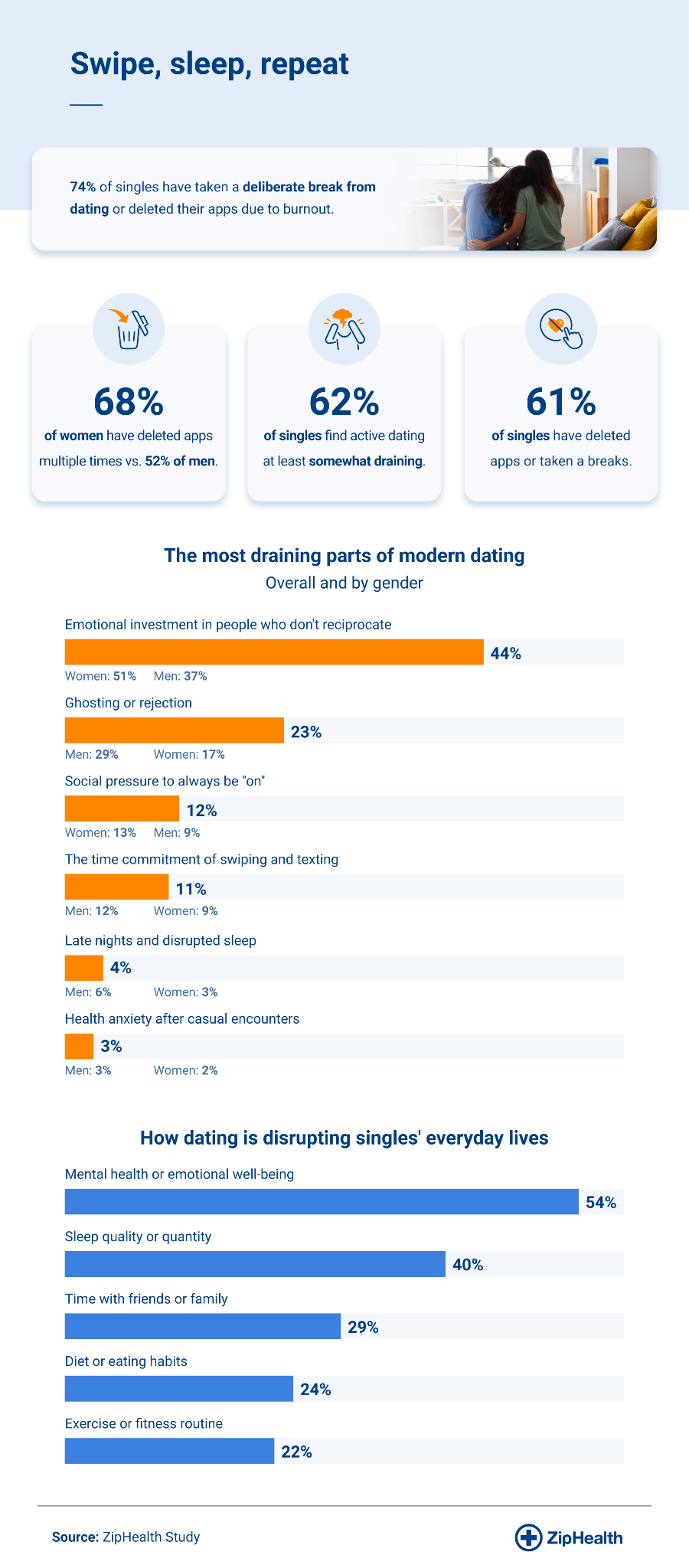
Almost two-thirds of singles (62%) said active dating felt emotionally draining to some degree, while only a small percentage (4%) described it as energizing. The majority (96%) fell somewhere between neutral and completely drained, suggesting that even neutral experiences can feel taxing over time.
The impact extended into everyday life. Over half (54%) said dating had affected their mental health, while many also reported disrupted sleep (40%), less time with friends and family (29%), and changes to their diet (24%). These effects show how dating stress can ripple into multiple areas of well-being.
Burnout was widespread across generations. While Gen Z is often seen as the most digitally engaged, they were less likely than millennials and Gen X to have deleted their apps multiple times due to burnout (56% vs. 64%). Still, many felt pressure to stay constantly available, even when they were already exhausted, with Gen Z leading at 44%.
What stood out most was the emotional toll of unreciprocated effort. More singles (44%) pointed to this as the biggest drain than ghosting, late nights, or social pressure combined. Women were especially likely to feel this strain (51% vs. 37%), while men more often cited rejection and ghosting as their main challenge (29% vs. 17%).
The real cost of swipe culture
Modern dating is not just about finding connections. It is shaping how people sleep, work, and take care of their health. From missed meetings to delayed STI testing and emotional burnout, the effects go far beyond a single date.
At the same time, the findings highlight opportunities for better support. Greater awareness of accessible care options and more open conversations about sexual health could help reduce anxiety and improve outcomes.
As dating continues to evolve, one question remains: how can people stay connected without sacrificing their well-being in the process?
Methodology
ZipHealth commissioned a survey of 1,002 U.S. adults who identified as single, casually dating, or in a non-exclusive relationship and had been on at least one date or romantic/sexual encounter in the past 12 months. The survey was fielded in 2026.
Respondent profile:
- Gender: Women 53%, Men 44%
- Generation: Gen Z (18-29) 32%, Millennials (30-45) 45%, Gen X (46-61) 18%, Baby Boomers (62+) 4%
- Relationship status: Single and not currently dating 61%, Single and actively dating 28%, Casually dating or in a situationship 8%, Open/non-exclusive relationship 2%
- Dating app usage: Actively using 32%, Recently used but on a break 30%, Never/not currently dating 27%, Meet people offline 12%
- Most used app: Tinder 18%, Hinge 18%, Bumble 9%
About ZipHealth
At ZipHealth, we make it easier to take control of your health with discreet, convenient online care. From treatments like Viagra and Cialis to support for sexual wellness, ZipHealth helps you access trusted care without the waiting room.
Fair Use Statement
This content is available for noncommercial use only. If shared, please include proper attribution with a link back to ZipHealth.