The Growing Demand For GLP-1 Coverage In The Workplace
Employees are rethinking benefits, with many prioritizing GLP-1 coverage over perks, pay, and even time off.


Weight loss is one of the most personal journeys a person can take, yet the workplace is becoming an unavoidable part of the conversation. As GLP-1 medications go mainstream, employees are rethinking what meaningful health benefits really look like. A new ZipHealth survey of over 1,000 workers shows just how big an opportunity that creates for employers who are ready to meet them there.
Key takeaways
- 51% of workers say GLP-1 medication coverage should be a standard benefit.
- 54% of workers would give up at least one workplace perk for employer-covered GLP-1 treatment, and 1 in 8 (13%) would sacrifice a full week of PTO.
- 32% of workers have kept a weight-loss effort private at work, and only 1 in 10 would disclose being on GLP-1 medication to a new employer.
- 31% of workers say an employer-covered GLP-1 treatment would boost their confidence at work and increase their company loyalty.
The rising expectation for GLP-1 coverage at work
Employee expectations around health benefits are changing fast, especially as newer treatment options become more widely discussed and understood.
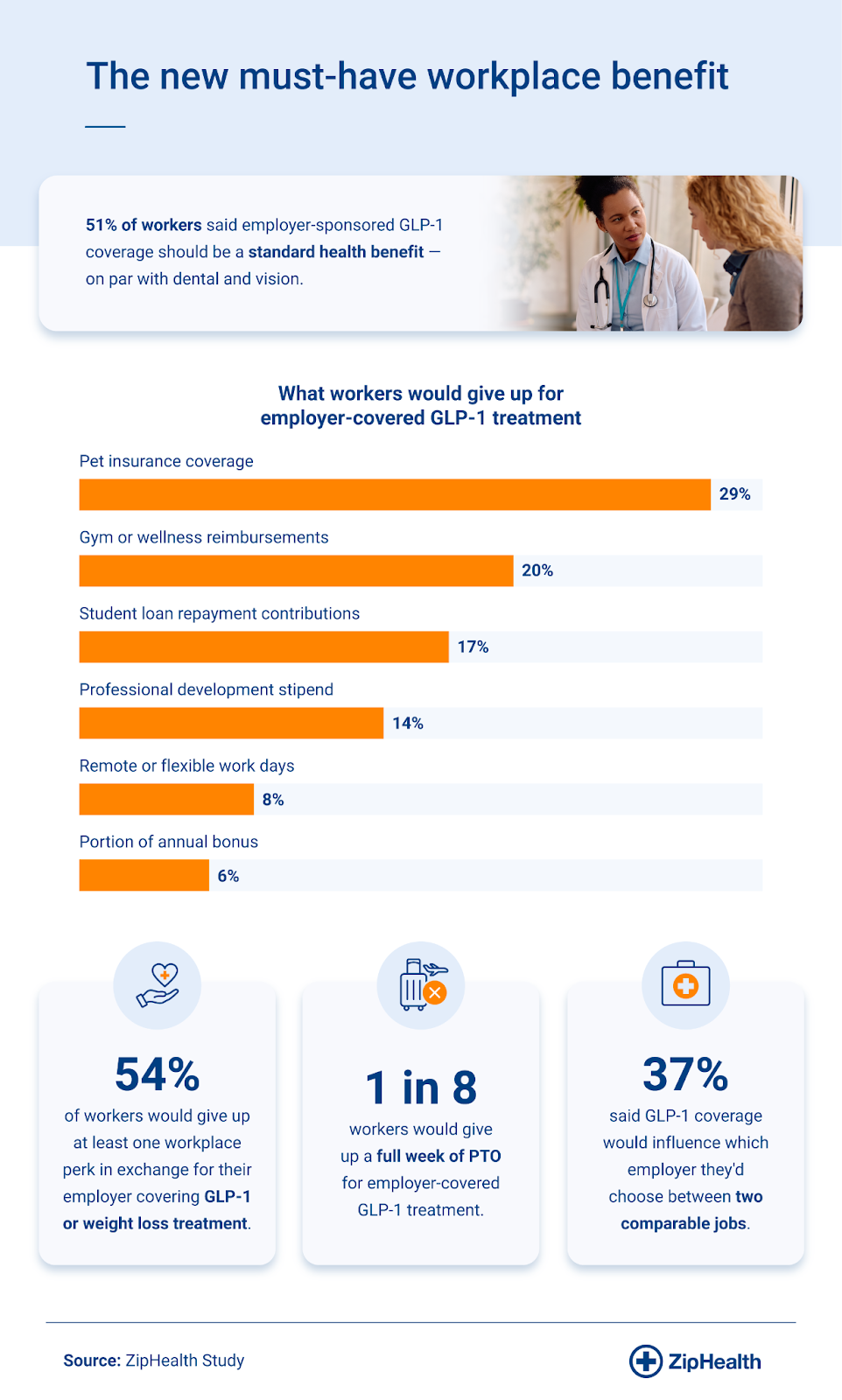
More than half of workers (51%) believe GLP-1 coverage should be a standard health benefit, signaling a clear shift in what people consider essential workplace support. Manufacturing (56%) and finance (55%) workers were the most likely to support standard coverage, while hospitality workers were the least likely (33%).
Younger workers appeared especially influenced by access to these treatments when making career decisions. Nearly half of Gen Z (47%) said GLP-1 coverage would sway their choice between two similar jobs, compared to 35% of millennials and 36% of Gen X.
In some cases, this went even further. Seven percent of workers had skipped applying for a job because they assumed weight loss treatment wouldn't be covered. Another 7% was willing to take a pay cut to work somewhere that offers GLP-1 coverage, and this rose to 9% among Gen Z.
Overall, 54% of workers said they would be willing to trade at least one financial or lifestyle benefit for GLP-1 coverage. The top cut they would make was pet insurance (29%), but 13% would sacrifice an entire week of PTO to access weight loss treatment through their employer.
How GLP-1 access impacts workplace confidence and loyalty
Access to weight loss care doesn't just impact employees' physical health. It also affects how they feel about their work and their place within a company.
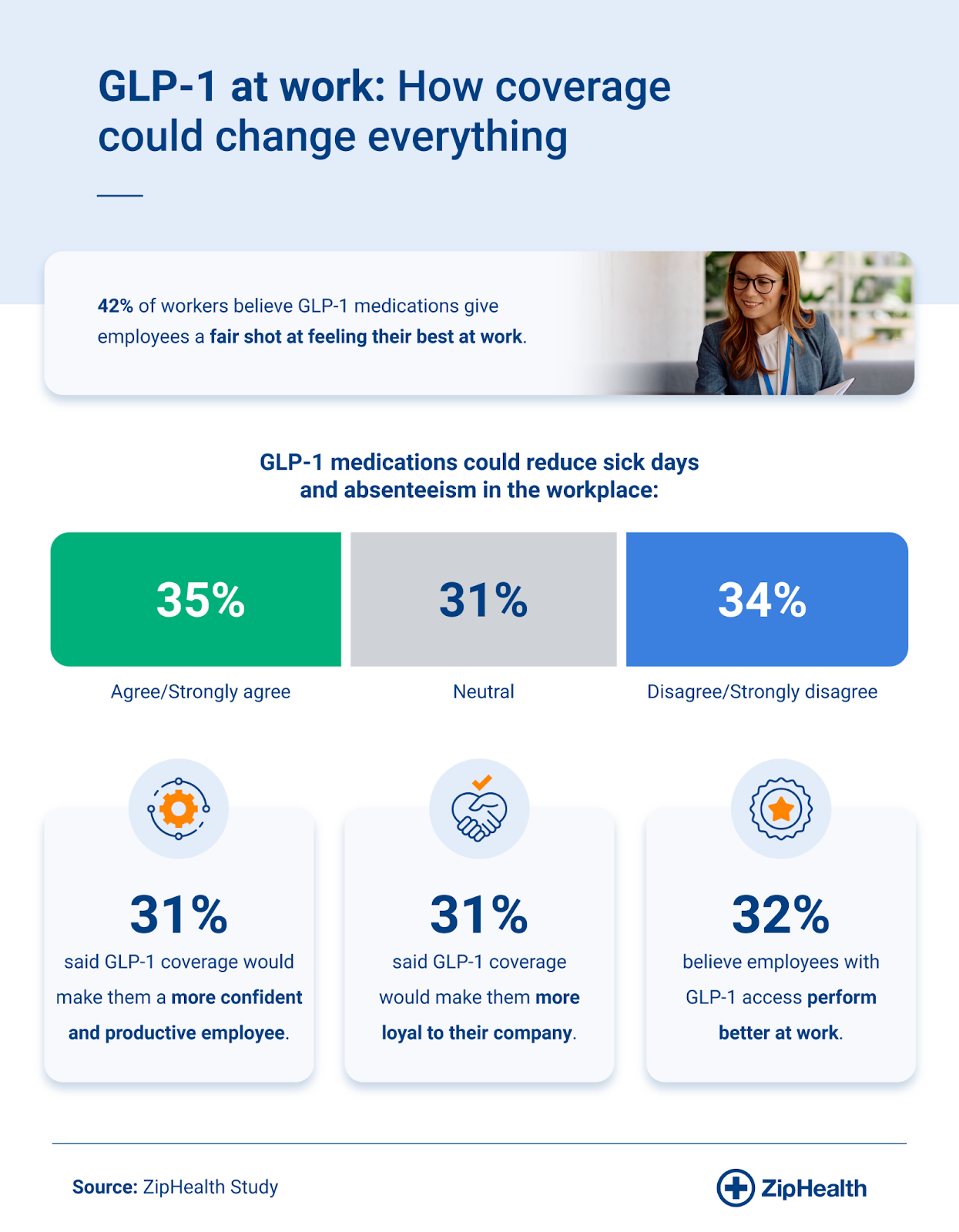
Nearly one-third of workers (31%) said employer-covered GLP-1 treatment would boost their confidence at work and company loyalty. Tech (37%) and finance (35%) workers were the most likely to believe coverage would improve their confidence and productivity. Hospitality workers reported the lowest expectations (21%).
At the same time, many workers felt that current benefits aren't distributed fairly. Over a third (38%) said employer health plans tend to favor higher earners over hourly workers. This perception was strongest in retail (49%) and hospitality (45%), while healthcare workers were less likely to feel this imbalance (32%).
Concerns about access extended across workplaces. Only 36% of workers believed weight-related care was equally accessible to all employees at their company. Tech (44%) and manufacturing (43%) workers were the most likely to feel access was equitable.
Why weight loss remains a private workplace struggle
Even as conversations about health become more open, weight-related care remains a sensitive and often private topic in the workplace.
Seventeen percent of workers said they had felt judged, stigmatized, or excluded at work because of their weight or weight loss efforts. Another 17% said they would worry that using GLP-1 medications could change how their manager or coworkers perceive their discipline or professionalism.
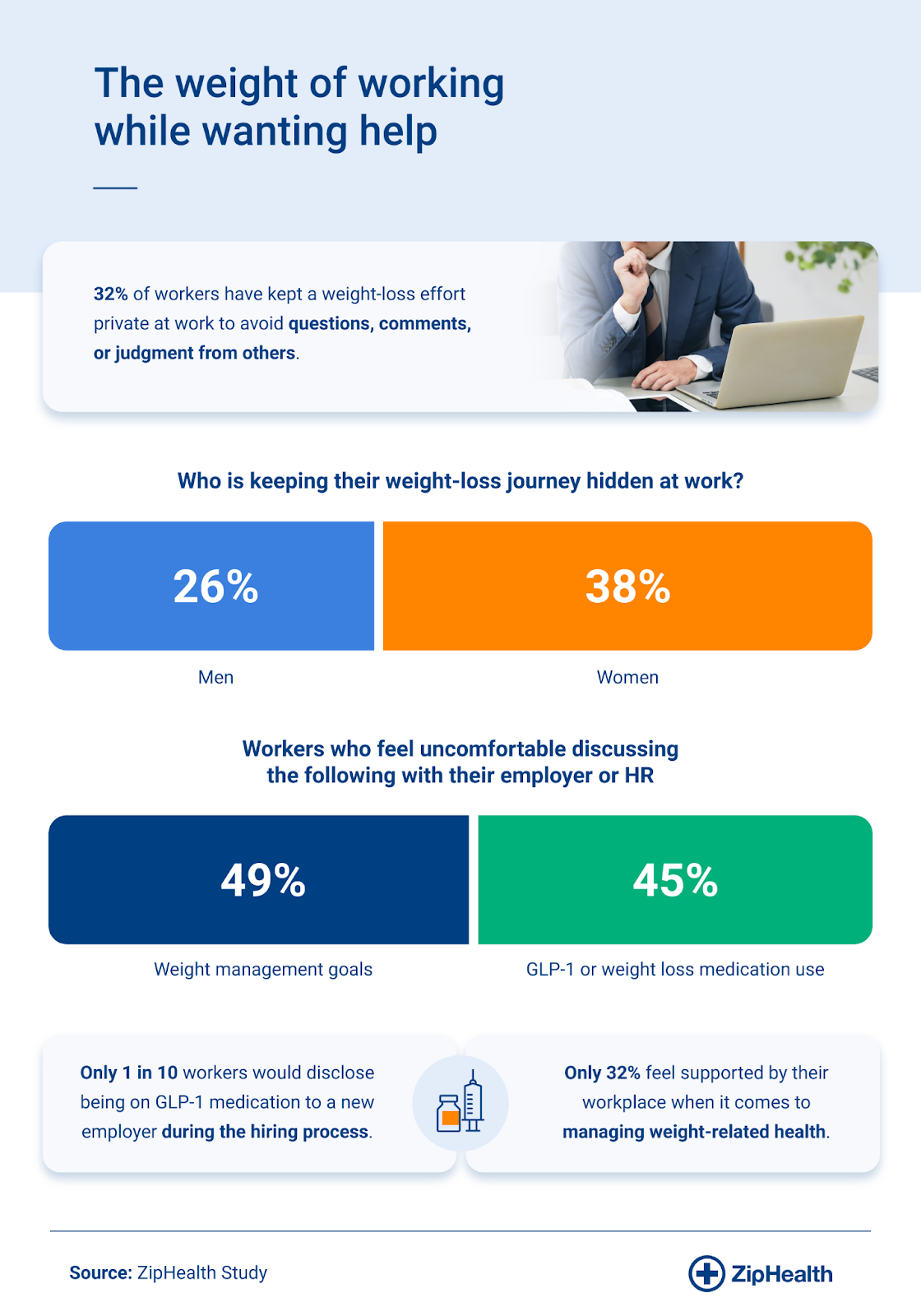
Many workers chose to keep these experiences private. Nearly one-third (32%) had kept their weight loss efforts to themselves at work, and only 1 in 10 said they would disclose their GLP-1 use to a new employer. Workplace culture may play a role here: 42% of workers said their workplace made it easier to talk about mental health than weight-related health.
Younger employees were especially cautious. Among Gen Z, 58% felt uncomfortable discussing weight management goals with HR, 53% were uncomfortable disclosing GLP-1 use, and 38% had kept their efforts private. Discomfort also varied by industry, with healthcare and retail workers (both 53%) the most uneasy discussing weight goals, compared to tech workers (35%).
Closing the gap between employee needs and benefits
GLP-1 medications are influencing how employees think about their health and their employment. Coverage expectations are rising, job decisions are being shaped by benefit offerings, and workplace culture around weight loss is overdue for a rethink. For employers willing to listen, the opportunity to build a more supported, loyal workforce has never been clearer.
At ZipHealth, we believe access to weight management care shouldn't depend on where you work or how much you earn. That's why we've made it easier than ever to connect with licensed providers to assess whether treatment is appropriate and explore treatment options from home, so anyone can take that first step on their own terms.
Methodology
This study is based on an online survey of 1,004 U.S. workers conducted in March 2026. Respondents represent a range of industries, employment types, and company sizes, and include workers across four generations: Gen Z (ages 18–29), millennials (ages 30–45), Gen X (ages 46–61), and baby boomers (ages 62 and older). Findings reflect a non-scientific, exploratory study and are not intended to be nationally representative.
About ZipHealth
At ZipHealth, we provide access to Compounded* Liraglutide to support personalized weight management to those eligible. Our streamlined online process makes it easy to connect with licensed providers and start treatment from home. Explore whether this option aligns with your goals, and take the next step at your own pace.
*Compounded medications are not FDA-approved and are prescribed when appropriate based on individual clinical assessment. GLP-1 medications are prescription treatments indicated for specific medical conditions and require clinical oversight.
Fair use statement
This content is intended for noncommercial use. If you share or reference it, please credit ZipHealth and include a link to the original source.