When Cravings Take Over: How Americans Struggle With Daily Food Noise
Discover how intrusive food thoughts affect people's focus, emotions, and finances, and what they say helps quiet constant cravings.


Food is meant to nourish, connect, and comfort us, but for many, it also takes up a surprising amount of mental space. If you've ever found yourself thinking about your next snack before you've even finished your meal, you're not alone. For some people, intrusive food thoughts, sometimes called "food noise," pop up throughout the day, whether they're hungry or not.
To better understand how common this is, we surveyed over 1,000 Americans about when food noise shows up, what triggers it, and how they try to quiet it. Their responses revealed just how much cravings can affect daily routines, emotions, and spending, and how many people are looking for ways to find a little more peace.
Key takeaways
- 14% of people spend over 2 hours per day thinking about food. That adds up to more than 14 hours a week, or 2.3 days a month.
- Gen Z is more than twice as likely as older generations to think about food while scrolling social media: 40% notice it, compared to 19% of Gen X and baby boomers.
- The most common intrusive craving overall is sweet foods, according to 72% of respondents, followed by salty snacks (62%), fast food (44%), and caffeinated or sugary drinks (28%).
- Nearly 60% of people said they spend up to $30 each week on food driven by cravings. That's up to $1,560 per year.
- 87% of people who tried distraction methods (such as cleaning or exercising) said that it helped quiet food noise.
- 59% of respondents said food-related thoughts frequently or occasionally made it hard to work or study.
Exploring the frequency, timing, and triggers of intrusive food thoughts
For many people, food thoughts weave in and out of the day without permission, showing up during work, downtime, and late-night scrolling. Looking at when and why these thoughts appear helps uncover patterns that often feel personal but are actually widely shared.
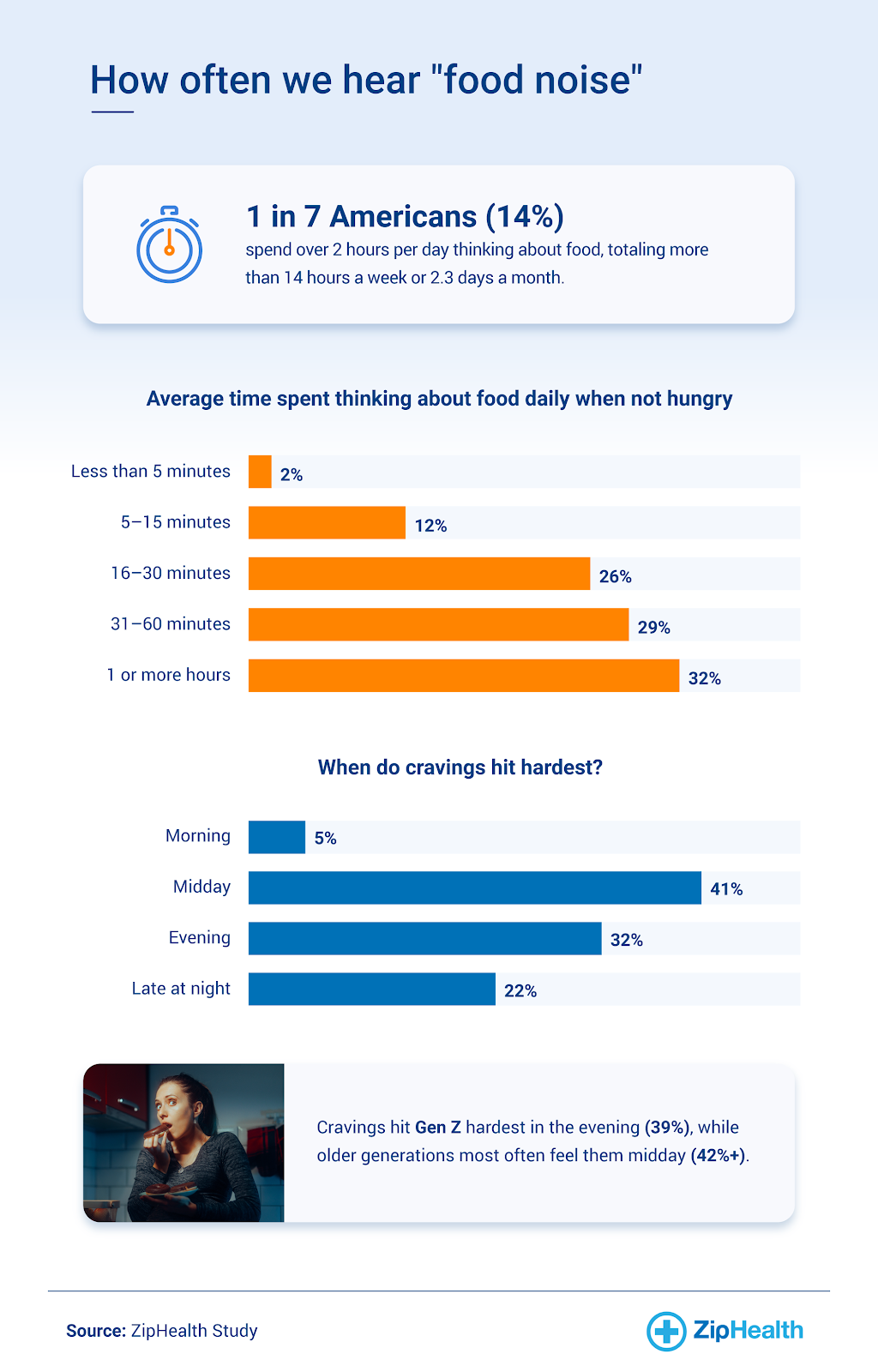
Most respondents (68%) reported spending up to an hour each day thinking about food when not hungry. Nearly one-third (32%) said their food thoughts exceeded an hour per day, totaling more than 7 hours a week, or slightly over 1 day each month. But for 14%, food noise consumed their thoughts for more than 2 hours daily, adding up to more than 14 hours each week or roughly 2.3 days a month.
Americans most often reported food cravings hitting midday (41%). For Gen Z, cravings were most likely to intensify in the evenings (39%), while midday was the most common peak for older generations (42% or higher).
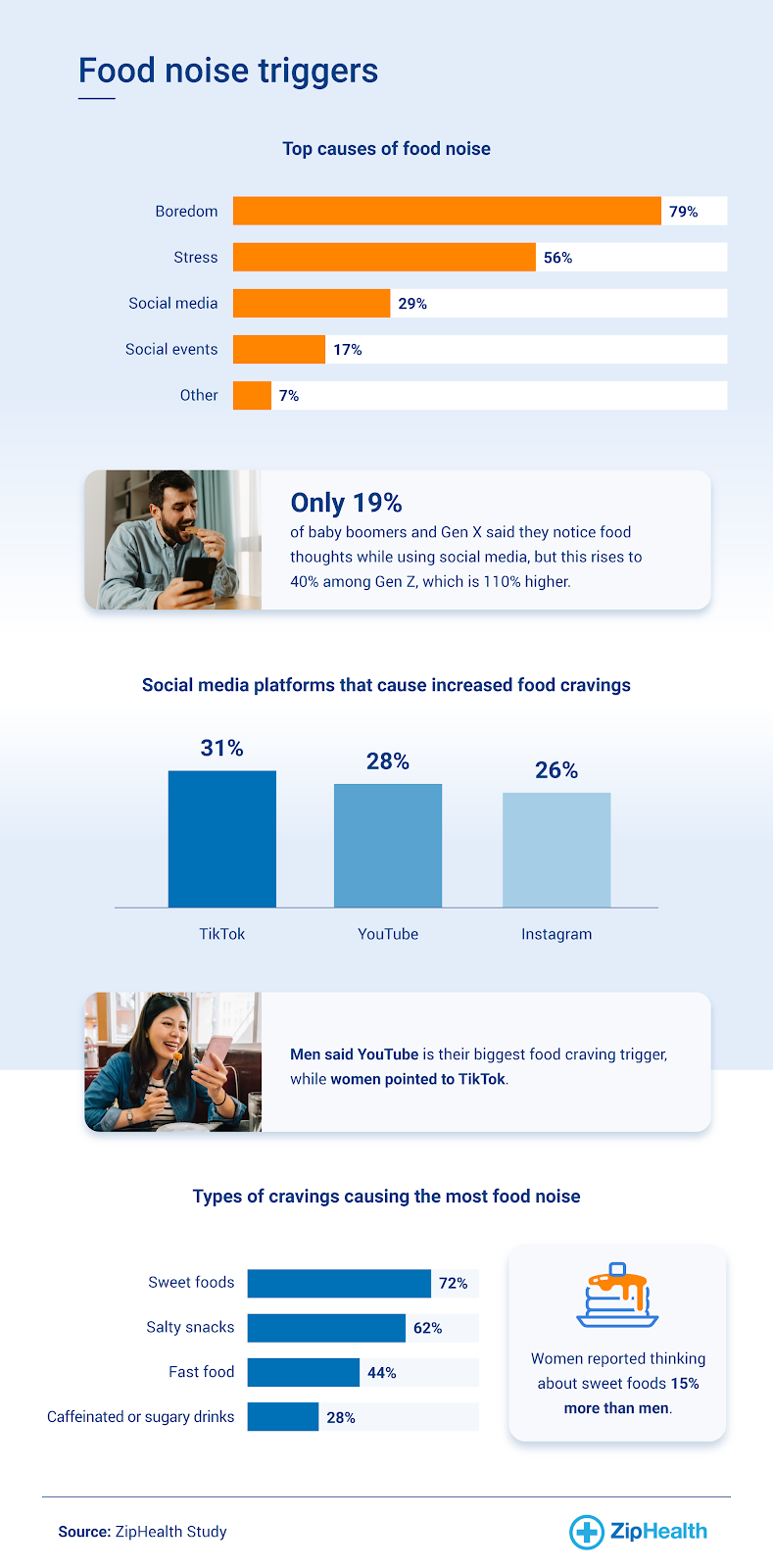
Many people associate their food cravings with emotional or environmental cues. Boredom was the top food noise trigger, cited by 79% of respondents, followed by stress (56%) and social media use (29%). While 19% of baby boomers and Gen X reported noticing food thoughts while scrolling social media, that number more than doubled for Gen Z, with 40% reporting the same.
TikTok was the platform Americans said was most likely to spark cravings, followed by YouTube. Thirty-one percent of TikTok users and 52% of YouTube users said they spend at least 3 hours a day on these apps. Men were more likely to point to YouTube as their top trigger, while women were more likely to cite TikTok.
As for what people craved, sweet foods were most common at 72%, followed by salty snacks (62%), fast food (44%), and caffeinated or sugary drinks (28%). Women reported thinking about sweet foods 15% more often than men.
Coping mechanisms people use and whether they work
When food noise becomes overwhelming, people often look for ways to quiet it, whether through structured diets or simple distractions. Different methods worked to varying degrees, and not all strategies offered relief.
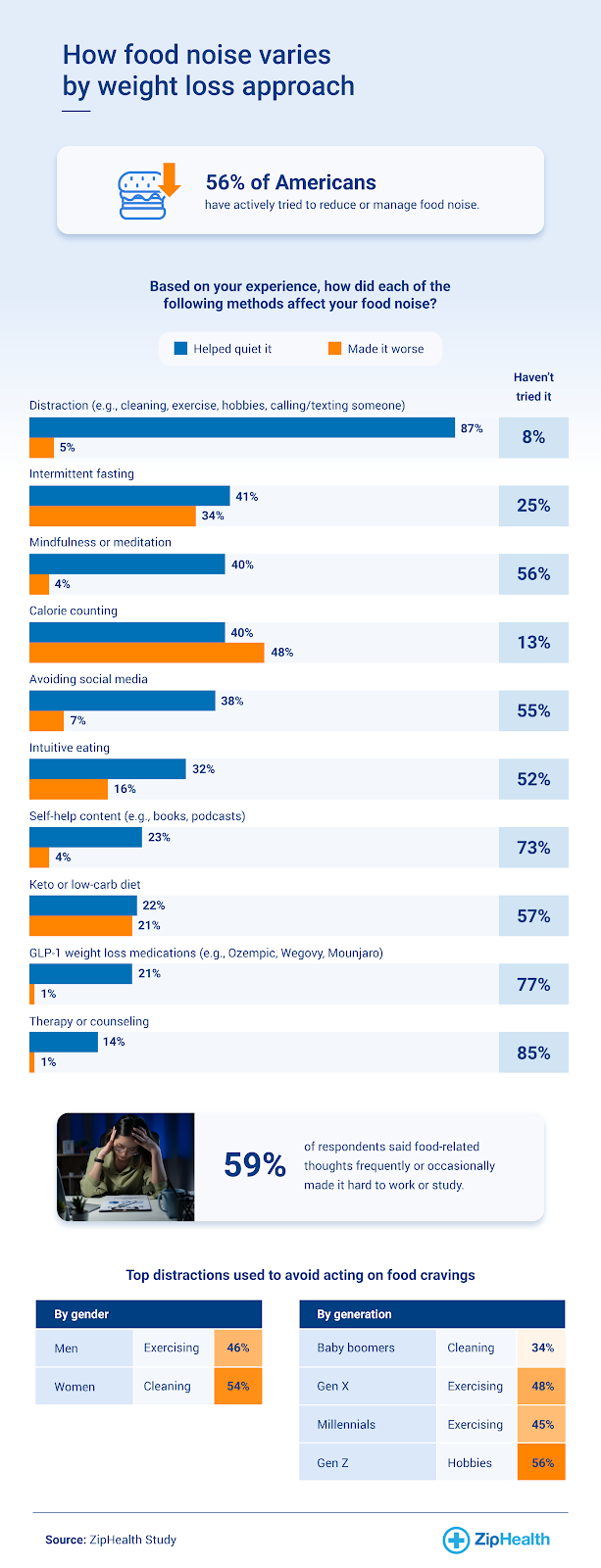
Many respondents had already tried to reduce or manage their food noise. More than half (56%) said they made attempts to quiet intrusive thoughts, with women (62%) reporting this more often than men (46%) and younger generations leading the way (59% for Gen Z vs. 6% for baby boomers). Distraction-based coping was one of the most effective approaches. Of the people who tried methods like cleaning, walking, or exercising, 87% said it helped lessen the noise.
Men were most likely to use exercise as a distraction (46%), while women more often relied on cleaning (54%). Distractions varied across generations as well. Baby boomers were most likely to turn to cleaning (34%), Gen X and millennials leaned toward exercise (48% and 45%, respectively), and Gen Z stood out for preferring hobbies like crafts or gaming (56%).
Other techniques were more complex. Intermittent fasting split opinions: while 41% said it curbed cravings, 34% felt it intensified them. Calorie counting received the highest rate of negative feedback, with 48% saying it actually made their food noise worse. These challenges have affected daily functioning. A majority of respondents (59%) reported that food-related thoughts frequently or occasionally have made it difficult to work or study.
The emotional and financial toll of persistent food thoughts
Food noise may start as a mental distraction, but its ripple effects reach far beyond cravings. Many respondents described emotional, financial, and lifestyle impacts that showed how deeply these thoughts can impact everyday life.
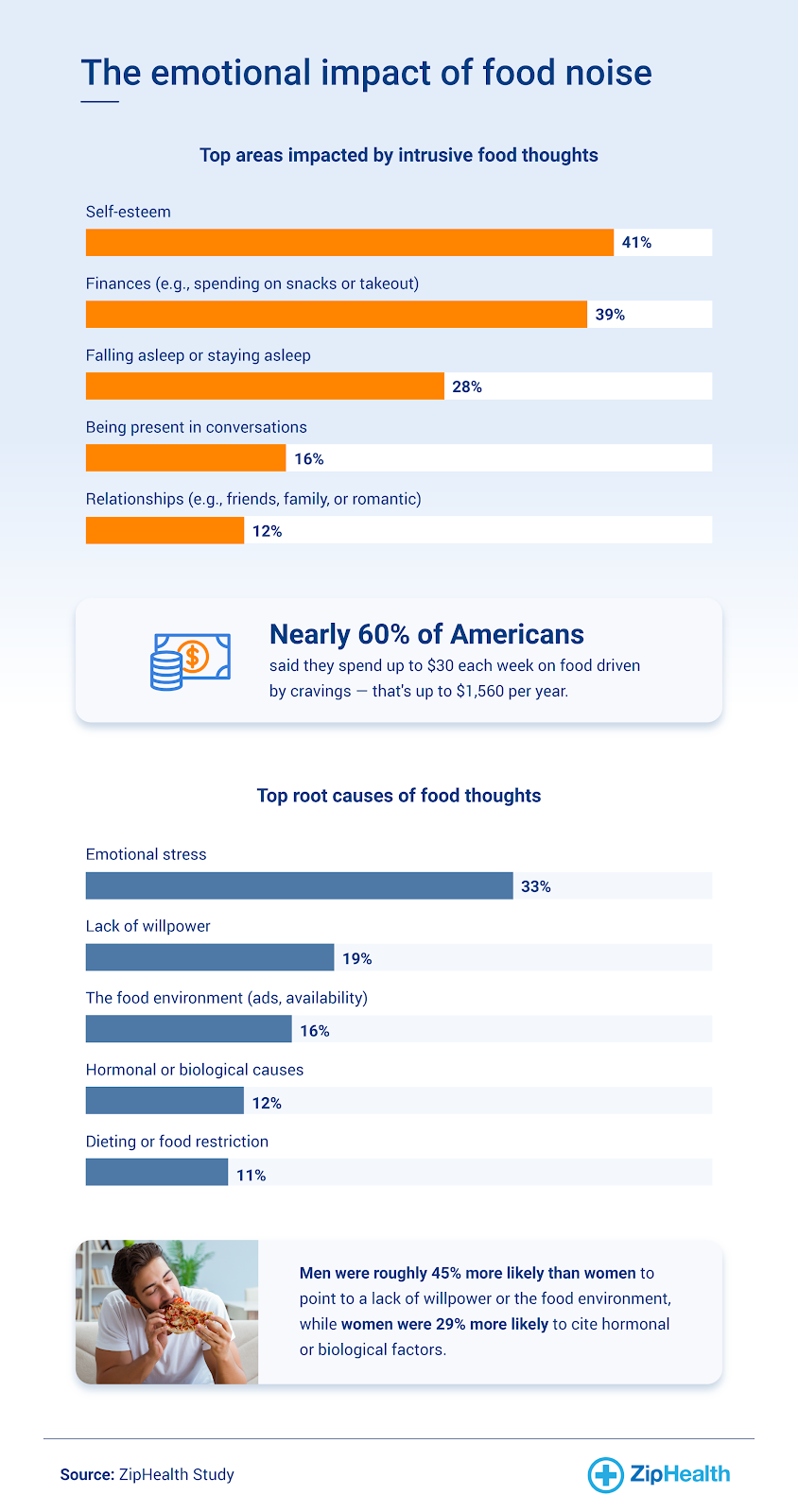
Intrusive food thoughts can affect how people feel about themselves. More than 2 in 5 (41%) said food noise has negatively impacted their self-esteem. These thoughts also influenced key areas of daily life, including spending (39%) and sleep (28%). Nearly 60% of respondents said they spent up to $30 each week on food driven by cravings, totaling as much as $1,560 per year.
When exploring root causes, emotional stress rose to the top, with 1 in 3 respondents citing it as the biggest driver of persistent food thoughts. Men were approximately 45% more likely than women to attribute a lack of willpower or their food environment as the cause. Women were 29% more likely to attribute cravings to hormonal or biological factors.
Finding calm in the noise
Intrusive food thoughts are far more common and disruptive than many people realize. From emotional triggers to financial strain, food noise affects nearly every part of daily life, especially for younger adults and those juggling stress. While distractions were among the most effective tools for quieting these thoughts, many people still found themselves battling cravings throughout the day.
Understanding where food noise comes from is a powerful first step. With growing awareness and more accessible care options, more people can find tools that fit their routines and help them feel more in control.
Methodology
We surveyed 1,002 US consumers to understand how persistent food-related thoughts, also known as "food noise," impact daily life. The survey explored the frequency and timing of these thoughts, emotional and environmental triggers, coping mechanisms, attitudes toward willpower, and the role of dieting, distraction, and medication. Respondents were also asked about the impact of food noise on their productivity, finances, self-esteem, and relationships.
The gender breakdown of respondents was 59% women, 39% men, and 2% nonbinary. Generationally, 6% were baby boomers, 21% were Gen X, 53% were millennials, and 19% were Gen Z. Less than 1% were from the silent generation and were excluded from generational comparisons due to low sample size. The data was collected in November 2025.
About ZipHealth
At ZipHealth, we make it easier to access discreet, convenient online treatment options for everyday health concerns. From sexual wellness to weight management, our services are designed to support your goals with clinically backed solutions delivered to your doorstep. For those exploring appetite or craving support, medication like Compounded Liraglutide + B12 provides additional pathways to manage health in a way that fits real life.
Fair use statement
This article may be shared for noncommercial purposes with proper attribution. Please include a link back to ZipHealth when referencing or quoting this content.